
Building the Ultimate Wildland Skid Unit: Equipment Checklist and Configuration
The right skid unit turns any pickup or side-by-side into a legitimate wildland attack platform. Here is what to spec, what to skip, and how to lay it out.
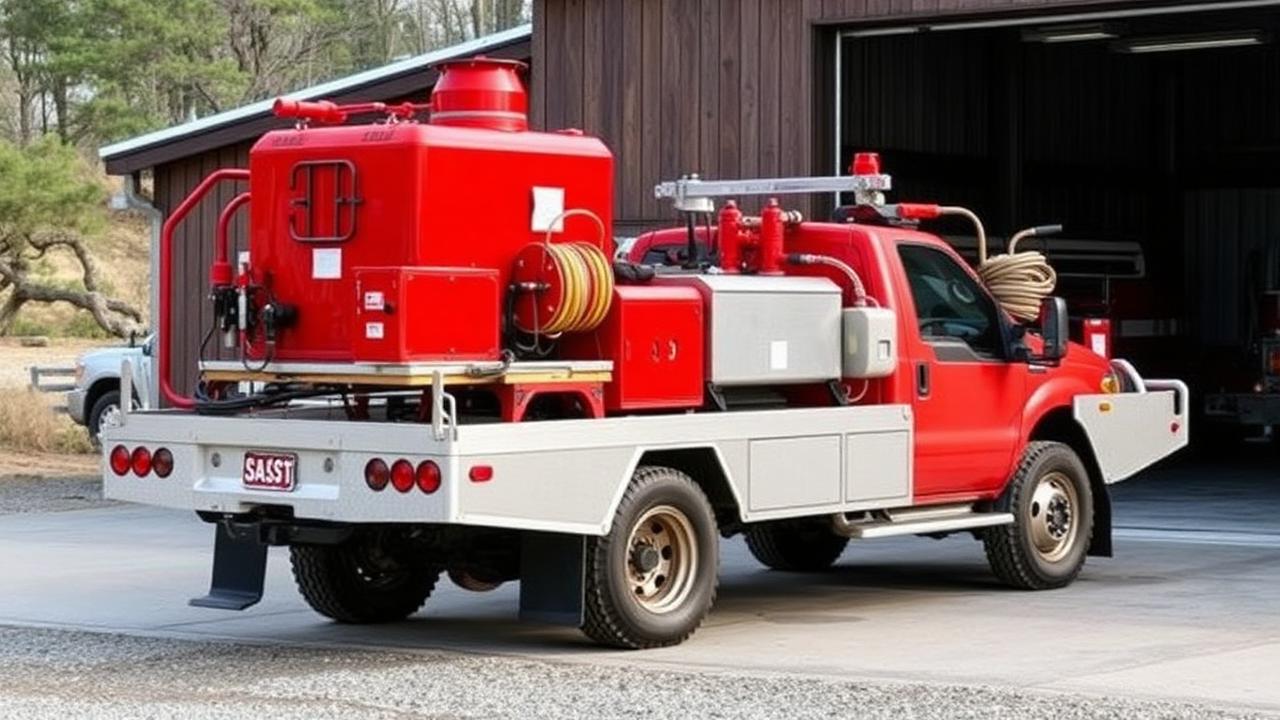
A wildland skid unit is one of the highest-leverage purchases a rural or brush-focused fire department can make. For roughly the cost of a decade-old used engine, a well-designed skid turns any half-ton to one-ton pickup — or in many cases, a heavy-duty side-by-side — into a legitimate initial attack platform. The trick is spec-ing the skid correctly the first time. A poorly configured skid becomes an expensive rolling storage bin. A well-configured skid becomes the piece of apparatus your crews want to take.
This article walks through the decisions that matter: platform, tank, pump, plumbing, foam, hose loads, tools, and layout. It is written for the fire chief, apparatus committee, or crew chief facing a real spec decision this budget cycle.
Start With the Vehicle
The skid is only as useful as the truck under it. Before you decide anything else, decide what platform you are building for.
Full-size pickup (three-quarter ton or one ton)
The most common platform. A 200 to 300 gallon skid on a well-maintained three-quarter or one-ton pickup with proper tires and locking differentials is a serious wildland asset. Downsides: gross vehicle weight ratings vary widely by trim package, and a full skid plus crew plus tools plus fuel will put many trucks over their rated payload. Check the door sticker before you spec.
Heavy-duty side-by-side (UTV)
A 60 to 80 gallon skid on a heavy-duty side-by-side is now a mainstream approach in the West, especially for interface districts with narrow access. Downsides: limited water and no space for a full crew.
Medium-duty flatbed (F-450 through F-650 class)
For departments with the budget and the need, a purpose-built medium-duty flatbed will carry 300 to 500 gallons of water plus a real pump, foam, and full tool complement without straining the platform. This is where a skid unit starts to become a purpose-built brush truck.
Pick the platform first. Every other decision flows from it.
Tank Sizing and Placement
Water is the payload. Everything else is scaffolding for the water.
For a full-size pickup skid, 200 gallons is the practical sweet spot. 300 gallons puts most half-ton and three-quarter-ton trucks past their comfort zone. For a side-by-side, 60 to 80 gallons is the standard. For a medium-duty flatbed, 300 to 500 gallons is realistic.
The tank shape and placement matter as much as the volume.
- Baffled tanks are non-negotiable. An unbaffled 200-gallon tank pushes the truck sideways every time you brake.
- Low center of gravity beats a tall narrow tank. Keep the water as close to the bed as possible.
- Sump placement determines where the pump can sit. A rear sump with a short suction run is easier to plumb.
- A properly sized fill port matters. A two-inch fill port takes forever from a tender.
Pump Selection
The pump on a skid unit does two things: it moves water at useful pressure and it survives being run at full RPM by a distracted crew for hours at a time. The two big categories are engine-driven centrifugal pumps and PTO-driven pumps.
Engine-driven pumps
The overwhelming default. A Briggs, Honda, or Kohler engine turning a centrifugal pump head. Reliable, field-serviceable, and simple to operate. Rated flows of 60 to 120 gpm at 100 psi are typical for the pumps commonly mounted on pickup skids. Consider the rated flow at the pressure you actually operate at, not the peak on the spec sheet.
PTO-driven pumps
Higher capacity, no separate engine to maintain, and available water any time the truck engine is running. More expensive, more complex to install, and generally overkill for a 200-gallon skid.
For most departments, an engine-driven pump in the 100 gpm class is the right answer.
Plumbing Layout
Bad plumbing is the difference between a skid that works and a skid that fights the crew.
Design goals:
- Two discharge lines minimum. A single discharge means you can only support one nozzle team, or one nozzle team plus a booster on the reel.
- Gated outlets, not on-off valves. Gating lets you throttle a line for mop-up without adjusting the pump.
- A dedicated bumper turret or front discharge for pump-and-roll operations. Even a small one-inch bumper line is a game-changer on a slow-moving grass fire.
- A tank-fill line off the discharge for refilling from a tender or hydrant without moving hose.
- A discharge-side foam manifold. This is where solid stick systems shine — one appliance handles foam and multi-line discharge in one place.
The Solid Foam Stick Manifold from Armour Fire Solutions is designed to sit exactly here: on the discharge side, giving the crew gated outlets for multiple hand lines and integrated foam capability without a separate proportioner.
Foam System
Every serious wildland skid should have Class A foam capability. The reasons are covered in depth in our Class A foam guide, but the short version is that foam-treated water is roughly two to three times as effective per gallon as plain water on light and flashy fuels, and dramatically more effective in mop-up.
The choice is between traditional liquid concentrate systems and solid stick manifolds.
Liquid systems are proven and well-understood, but they add complexity: a concentrate tank, a proportioner, calibration, and cross-contamination risk if not carefully designed.
Solid stick systems eliminate most of that complexity by design. No proportioner, no calibration, no separate concentrate tank. Sticks store on a shelf, drop into the manifold on-scene, and are used until dissolved. For a skid unit where every pound and every cubic foot counts, solid stick foam is often the right answer.
Hose Loads
Standard hose loads on a full-size pickup skid:
- 200 feet of 1.5-inch attack line on a preconnect for structure protection and heavy attack.
- 300 feet of one-inch hose in bundles or a booster reel for mobile attack and mop-up.
- 100 feet of three-quarter-inch hose for finishing mop-up in tight spaces.
- 100 feet of 1.5-inch supply hose for tender-fill operations.
Total: about 700 feet of hose. Store it where the crew that will use it can reach it, not where it looks tidy at the station.
Nozzles
Adjustable-gallonage combination nozzles at 30 gpm and 60 gpm settings cover the vast majority of wildland tasks. A single fog nozzle on the booster reel handles mop-up. A smooth-bore or purpose-built foam nozzle on the primary attack line delivers longer reach and better foam quality if your foam program includes aspirating nozzles.
Hand Tools
The hand tool complement is where a wildland skid becomes a wildland tool. Minimum recommended:
- Two Pulaskis.
- One combi tool (McLeod or similar).
- One shovel (round-point or fire shovel).
- One chainsaw with fuel, bar oil, extra chain, and a wedge kit.
- One drip torch with fuel.
- Fire shelters for every seat.
- Personal water bottles and a case of drinking water for the crew.
- A basic medical kit rated for at least two patients.
Store tools in a purpose-built rack, not in a jumbled tool box. Time spent digging for a Pulaski is time the fire moves.
Communications and Situational Awareness
A skid unit is often the first arriving asset. It has to be able to talk to command and to any incoming aircraft.
- A mobile radio programmed with local, mutual aid, and air-to-ground channels.
- A weather kit — belt weather kit or a small handheld anemometer.
- A GPS or mapping tablet, ideally with offline topos of the district.
Layout and Ergonomics
The best skid we ever built and the worst skid we ever built carried the same equipment. The difference was layout.
Layout principles that hold up in the field:
- The pump control panel faces the safe side of the truck, away from the fire.
- Hose is stored where the crew that will pull it can grab it from ground level.
- Foam sticks store within arms reach of the manifold.
- Tools store in the same location on every truck in the district. Muscle memory is worth more than clever design.
- Nothing that has to be reached in the first thirty seconds requires unlatching a compartment.
Budget and Lifecycle
A well-built pickup skid runs $18,000 to $35,000 depending on tank size, pump class, foam system, and installation labor. That is a fraction of the cost of a purpose-built brush truck, and the resale value stays reasonable if the skid is treated as a modular unit rather than being welded to a specific truck.
Plan on a fifteen-year service life for the skid itself. The truck under it will probably need replacement two or three times over that period. Building the skid as a self-contained, transferable unit makes that transition painless.
Closing
A wildland skid unit is one of the best returns on investment in the fire service. Get the spec right and you build a piece of apparatus that punches above its weight for years. Cut corners on plumbing, foam, or layout and you build an expensive lesson.
Every decision above is one we have made — sometimes correctly, sometimes not — over years of building and running skids in the field. Take the ones that apply to your district, ignore the ones that do not, and build the truck your crews actually want to take.
Ready to see the numbers?
Run our interactive ROI calculator with your own inputs.