
The Future of Rural Fire Departments: Technology, Funding, and Recruitment
Rural fire service is at an inflection point. Aging membership, changing fire environments, and thin budgets are forcing new approaches to old problems.
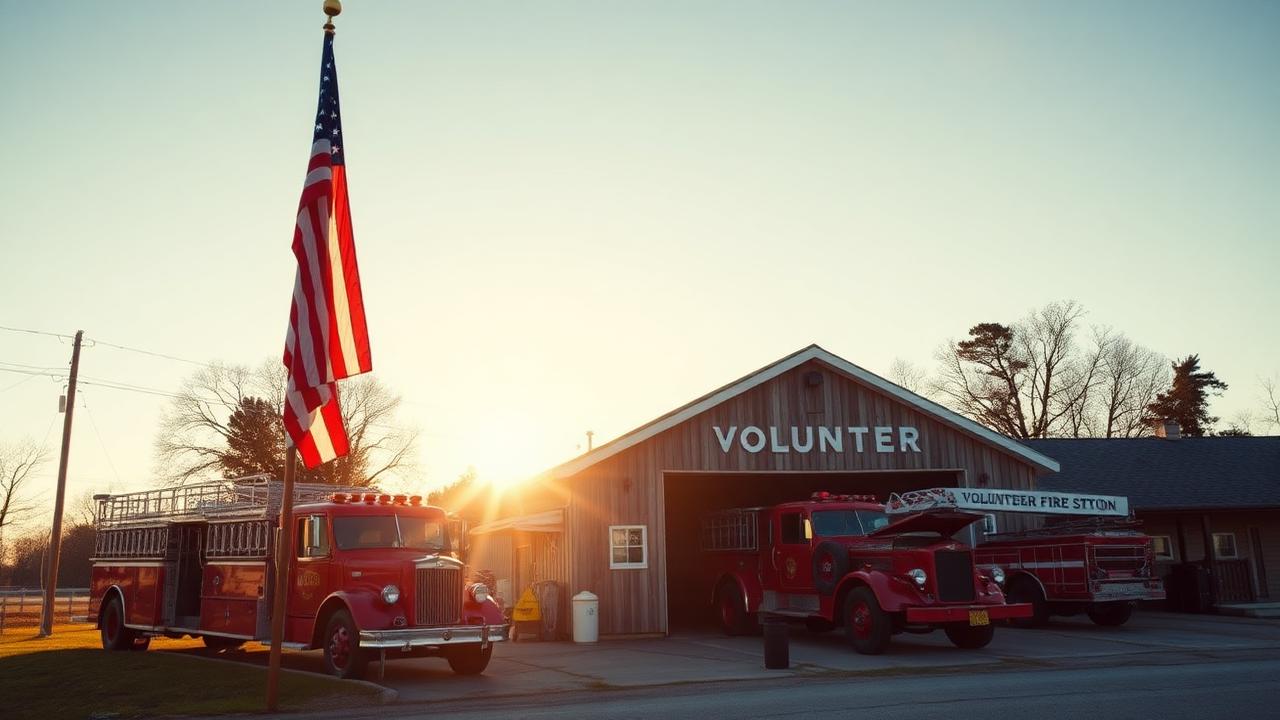
Rural fire departments — the vast majority of fire agencies in the United States — are at an inflection point. Volunteer rosters are shrinking. Response areas are expanding as development pushes into the wildland. Grant funding is more competitive than ever. And the fire environment itself is changing in ways that reward departments that can adapt and punish those that cannot.
This is not a doom-and-gloom piece. There are more tools, more resources, and more operational knowledge available to a rural fire chief in 2026 than at any point in the history of the American fire service. The departments that thrive over the next decade will be the ones that use those tools deliberately.
The Volunteer Problem
The National Volunteer Fire Council has been tracking the same trend for two decades: the average age of the American volunteer firefighter has increased by roughly a decade since the early 1990s. Total volunteer numbers are down more than fifteen percent from their peak.
The reasons are structural, not attitudinal. Rural populations have been consolidating into towns for a century. Working families have less time. Training requirements have expanded significantly. Employers who once released members for daytime calls have grown less flexible.
None of these are fixable at the department level. What is fixable is how a department recruits, trains, and retains the members it has.
Recruitment strategies that actually work
The departments winning the recruitment battle in 2026 share a few common practices.
- They separate the recruitment funnel from the certification funnel. A prospective member can join and start showing up before they are Firefighter I certified. They earn their certifications as they go.
- They have modernized their public face. A department that recruits on Instagram and TikTok reaches people that a bulletin-board flyer never will.
- They offer explicit non-firefighting roles. Not everyone wants to be inside a burning building. Traffic control, rehab, apparatus operator, public education — all are legitimate paths into the service and often lead to full membership.
- They treat retention as a first-class concern. The cost of losing a trained three-year member is substantial. Small investments in equipment, in training opportunities, and in the social fabric of the department pay outsized dividends.
The Fire Environment Is Changing
Rural departments in most of the country are seeing longer fire seasons, more wind-driven events, and more interface exposure than a generation ago. The specific drivers vary by geography — drought, fuel loading, development patterns, insect kill — but the direction of the trend is remarkably consistent.
The operational implications are real:
- Structure fire calls are a shrinking percentage of most rural department call volume. Wildland, brush, and interface calls are growing.
- The window between ignition and a fire that is beyond initial-attack capability is shorter than it used to be.
- Mutual aid agreements are being called on more often, and the aiding department is often already committed to its own incident.
A department that has structured itself around structure response and treats wildland as an afterthought is fighting the last war. The equipment mix, the training program, and the apparatus specifications all need to reflect the calls that are actually coming in — and the calls that will be coming in five years from now.
Technology That Is Actually Useful
Every year, the fire service is pitched a wave of technology products that promise transformation and deliver marginal value. A few categories are genuinely useful for rural departments in 2026.
Modern portable pumps and lightweight apparatus
The current generation of portable pumps and lightweight skid units puts capability on the fire that was unimaginable twenty years ago. A department that trades in an aging medium-duty brush truck for a purpose-built skid on a modern one-ton pickup often gets more capability and better reliability at a fraction of the annual cost.
Solid stick foam
The most operationally significant advance in Class A foam in a generation. Solid stick foam eliminates the storage, calibration, and cross-contamination problems that kept smaller departments from adopting foam. A discharge-side manifold like the Solid Foam Stick Manifold from Armour Fire Solutions puts foam capability on any skid or engine for a fraction of the cost of a traditional proportioner system.
GIS and offline mapping tablets
A tablet running current topographic data, response maps, water supply locations, and preplan information changes what an initial-attack crew can do. The technology has matured to the point that even small departments can afford to equip every apparatus.
Modern PPE and communications
Wildland PPE has improved dramatically. Portable radios have improved dramatically. Both categories are worth spending real money on. Cutting corners on PPE or radios is a false economy.
Data and records management
A modern records management system pays for itself in NFIRS reporting time savings and in the grant-writing evidence base it produces. Cloud-based systems are now cheap enough that no department has a good reason to still be paper-based.
Funding: Getting Better at the Grant Game
The Assistance to Firefighters Grants program, the Staffing for Adequate Fire and Emergency Response program, the USDA Volunteer Fire Assistance program, and various state-level programs collectively distribute hundreds of millions of dollars a year to fire departments. Most rural departments leave a substantial amount on the table.
What separates departments that win grants consistently from those that do not is not luck. It is discipline about a few things.
- They keep clean data. Call volumes, response times, mutual aid activity, apparatus condition, training records — all documented and easy to pull.
- They plan multi-year capital purchases. A grant application backed by a written five-year plan is more competitive than one that reads as a wish list.
- They partner. Regional grant applications covering multiple small departments are increasingly favored by funders.
- They match grants to actual documented gaps. A grant application for a piece of equipment the department cannot demonstrate a need for will lose to one that can.
For departments that cannot afford a full-time grant writer, contract grant writers who work on a success-fee basis are widely available and often pay for themselves several times over.
Regional Consolidation and Cooperative Purchasing
The pressure on rural departments has driven a quiet trend toward regional consolidation and cooperative purchasing. Two neighboring five-person departments that jointly purchase apparatus, jointly train, and jointly maintain equipment can operate as a functional twelve-person department without giving up local identity.
The consolidation does not have to be formal to be valuable. Simple joint purchasing agreements for hose, fittings, foam concentrate, and PPE can drop unit costs by twenty to thirty percent. Joint training programs make everyone's crew better.
The Cultural Piece
None of the above matters if the culture of the department is broken. Departments that struggle with recruitment, retention, and effectiveness often struggle with a common set of internal problems: cliques, hazing, resistance to new members, and unwillingness to update long-standing practices in light of new information.
These are hard problems, and they are not solved with a memo. They are solved by leadership that consistently models the culture it wants to see, by fair and transparent processes for advancement and discipline, and by an unbending commitment to treating every member as a full member.
The departments that get this right become the departments that people in the community actively want to join. The ones that do not become the departments with the perpetually unfilled roster.
Looking Ahead
The next ten years in rural fire service will be defined by how well departments adapt to a changing operational environment with fewer people, shorter budgets, and higher expectations. The technology, funding sources, and knowledge base are all better than they have ever been. The departments that use them well will be the departments still responding in 2036.
The fundamentals have not changed. Show up, be trained, be equipped, and take care of your community and each other. Everything above is scaffolding for those fundamentals.
Ready to see the numbers?
Run our interactive ROI calculator with your own inputs.