Firefighter Safety in the Wildland-Urban Interface: Lessons From the Field
The wildland-urban interface is where the most complex and dangerous fires happen. Here is what a decade of after-action reports tells us about staying safe.
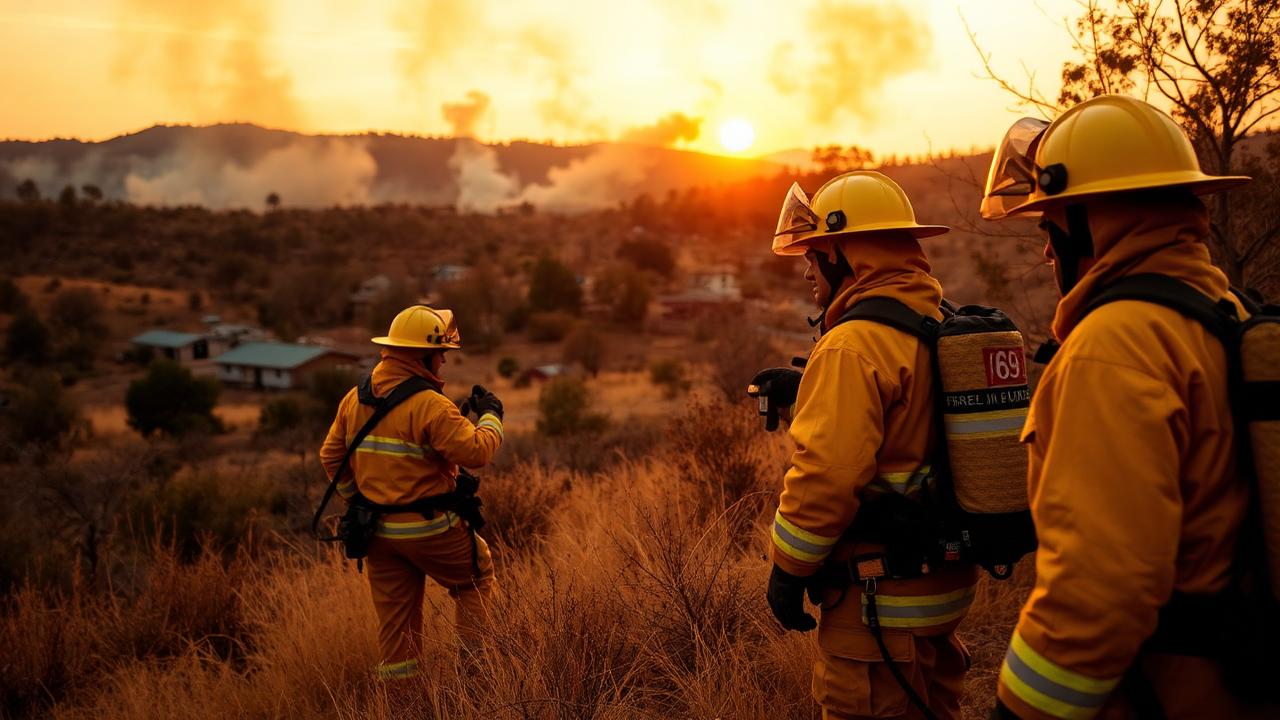
The wildland-urban interface — the zone where combustible vegetation meets combustible structures — is the most demanding and most dangerous operational environment most rural firefighters will ever work in. Fire behavior is unpredictable, structure exposure is constant, evacuation traffic complicates access, and the temptation to do too much with too few resources is always present.
This piece is not a substitute for formal wildland training. It is a distilled set of lessons from a decade of after-action reports, LODD investigations, and honest debriefs. Every point below has been paid for by someone. Take them seriously.
The Interface Is Different
Wildland fire behavior is dangerous. Structure fire behavior is dangerous. WUI fire is dangerous in ways that are unique to WUI.
In pure wildland, fire behavior is driven primarily by fuel, weather, and topography. Escape routes are (usually) natural — the black, roads, ridges, drainages.
In pure structure, fire behavior is bounded by the geometry of the building. Escape is a matter of finding the door.
In WUI, both sets of behaviors combine and interact. A structure in the path of a wind-driven grass fire can flash to full involvement in minutes, throwing embers three-quarters of a mile downwind and igniting new fires in vegetation you thought was safe. A house that appears to be a defensible saveable exposure can turn into an inescapable trap if the wind shifts and the driveway is the only way out.
The single most important mindset shift for a crew moving from wildland or structure work into the interface is that the two worlds interact continuously and unpredictably.
LCES: Still the Framework
The Lookouts, Communications, Escape Routes, Safety Zones framework is thirty years old and still the best organizing principle we have for interface safety.
Lookouts
Someone with eyes on the fire whose job is nothing else. In interface work, that often means a lookout positioned upslope or on a roof with a clear view of the head and both flanks. In an active event, the lookout position should rotate every hour so the person on watch stays sharp.
Communications
Every crew member has a working radio on the tactical channel. Every crew member knows the escape route and the safety zone. Every crew member knows the trigger point that initiates the retreat. Radios are checked at the start of every operational period, batteries swapped at every meal break.
Escape Routes
Every position has at least two escape routes, and both are timed. If the fastest escape takes ten minutes and the fire is moving at fifteen minutes per hour toward your position, the trigger point is not when the fire arrives — it is when it is fifteen minutes out.
Safety Zones
A safety zone is a place where a firefighter can survive without a fire shelter. That is a specific and demanding definition. A cleared driveway in the middle of continuous timber is not a safety zone. A large green pasture with a hundred-foot buffer of low-intensity fuels around it might be.
Structure Triage
The single most important tactical decision on any WUI incident is which structures get defended and which do not. Get triage wrong and crews end up committed to indefensible structures when they should have moved on to defensible ones.
The California Office of Emergency Services triage categories are widely adopted:
- Non-Threatened: no immediate action required.
- Threatened Defensible: crew action required; adequate defensible space and safe access.
- Threatened Non-Defensible: crew action likely to fail or to put the crew at risk. Do not commit.
- Rescue Drive-By: too late to save the structure; move to next.
A structure can move between categories as conditions change. A house that is threatened defensible at 1400 may be non-defensible by 1500 if the wind picks up. The crew leader has to keep re-triaging as the incident evolves.
The Ember Cast Problem
Structure ignition in WUI events is dominated by ember cast, not by direct flame contact. Post-fire studies of major interface events consistently show that sixty to ninety percent of structure losses started with embers landing in a receptive fuel — leaf-filled gutter, wood mulch bed, pile of firewood against the wall, gap in the siding.
Operational implications:
- Crews defending a structure need to be checking gutters, decks, and vent openings continuously, not just spraying water on the front of the house.
- The most valuable pre-treatment is often removal of receptive fuels within thirty feet of the structure, not spraying foam or gel on the walls.
- Ember cast can start new fires far ahead of the main front. Lookouts have to watch the whole compass, not just the direction of the head.
Vehicle Positioning
The truck is the crew's escape vehicle. Position it accordingly.
- Nose out. Every time.
- Windows up. Every time.
- Keys in the ignition. Every time.
- Doors closed but unlocked.
- Position on the safe side of the structure with a clear path out.
- If the driveway has a dead end and no turnaround, do not park in it. Ever.
These are non-negotiable. They cost nothing and have saved crews on multiple documented events.
Water Supply and Endurance
In interface events, water supply becomes an operational limit within the first hour on most incidents. Hydrants may be non-functional if the power grid is down. Tenders will be shared across multiple divisions. Portable pumps drafting from swimming pools and stock ponds may be the only reliable local supply.
A crew committed to structure defense with 200 gallons on the truck and no plan for resupply has forty-five minutes of flowing water. When that runs out, they are either evacuating or committing to a losing defense.
Foam capability extends every tank. A discharge-side foam system like the Solid Foam Stick Manifold lets a 200-gallon skid do the coating and pre-treatment work of 400 to 600 gallons of plain water. That extension is exactly the kind of buffer that turns a marginal defense into a successful one.
Fatigue and Decision Quality
WUI incidents run for days and weeks. Fatigue kills decision quality. The classic pattern in LODD reports is a crew making a decision on day four that they would never have made on day one — driving through smoke into a canyon, staying committed to a structure past the trigger point, missing a radio call from the lookout.
Discipline around rest is a command responsibility. If the incident is running twenty-four hour operations, no crew should be on a working assignment for more than sixteen hours. Meal breaks are meal breaks. Sleep is sleep. A commander who lets a crew skip both because the incident is intense is setting up the conditions for a fatal mistake.
After-Action Honesty
The single biggest driver of long-term safety in an organization is honest after-action review. Every significant incident should generate a written debrief covering what worked, what did not, and what would be done differently. Names off, lessons on.
Departments that do this well develop institutional memory that outlasts any individual crew member. Departments that do not repeat the same mistakes decade after decade.
Personal Preparedness
Institutional safety is built on individual preparedness. Every firefighter working in the interface should:
- Have current wildland PPE that fits and is in good condition, including a shelter that has been deployed in practice.
- Carry personal drinking water and food adequate for the shift.
- Know the geography of the district well enough to identify escape routes without a map.
- Have a current, comfortable, and honest self-assessment of their own physical condition. If you can not walk a mile with a pack, you can not deploy a hoselay uphill in smoke.
Closing
Interface firefighting rewards teams that combine tactical aggressiveness with unbending discipline about safety fundamentals. There are no shortcuts. Every fatal LODD investigation in the past twenty years reads like a checklist of skipped fundamentals: no lookout, unclear escape route, unfamiliar safety zone, degraded communications, commitment past the trigger point.
The habits above are boring. They are also the difference between the crews that get to write the after-action report and the crews that get named in one.
Ready to see the numbers?
Run our interactive ROI calculator with your own inputs.